
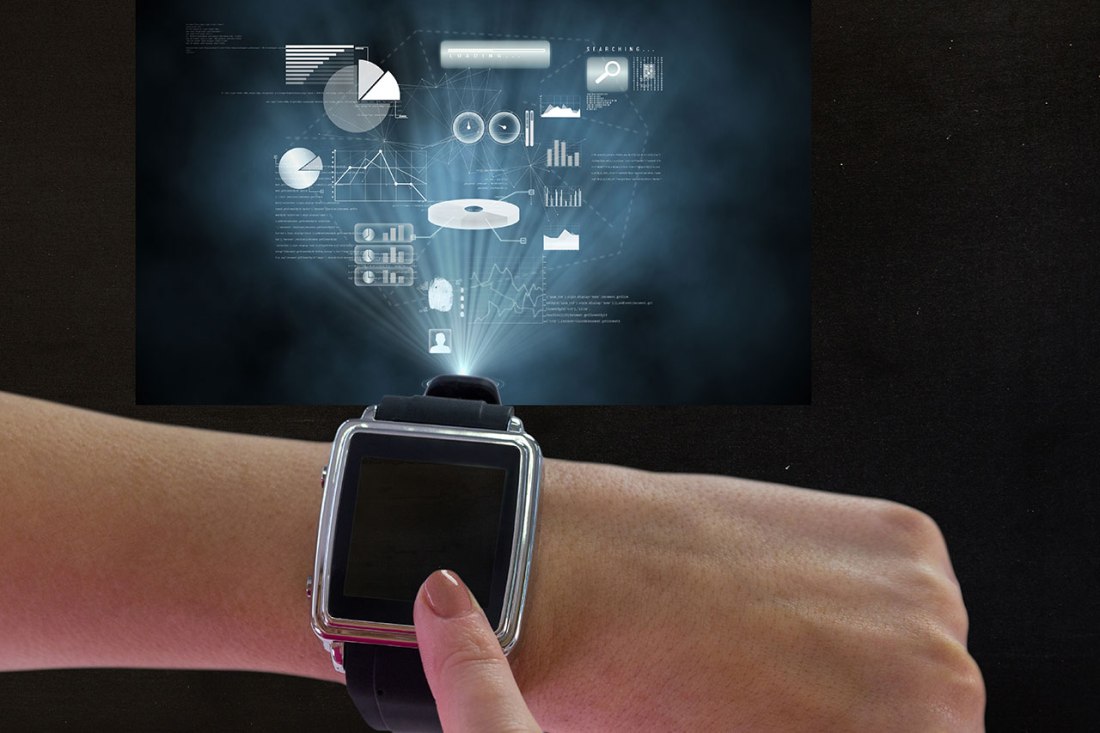
Wearables-A new beginning..

Wearable-technology-in-Fintech.jpg

“The more the technology grows, the easier life becomes”

Day by day the world is changing. The man with his full potential is trying to make every hurdle disappear and bring the best out of the technologies that we have. And latest came the new technological innovation wearables. Many may wonder what this is all about and will be eager to know more about this technology which has turned out to be a much-discussed piece of innovation.

Anything that is worn to detect health or mobile applications and web monitoring to analyze health generally comes under the term wearables. The use of this in clinical practices are increasing day by day.

Wearables are currently growing highly in popularity with the hope of growth to $25 billion by 2019. The devices like Fitbit, jawbone etc have been popular among the public because of their cheap rates and affordability. With the rise of chronic conditions like obesity due to our lifestyles, use of this technology has reached the heights.

What makes it a better option??

The higher compliance rate, reduced dropout rate etc has added its relevance and also provides an additional advantage of reduced hospital visits. More accuracy and accessibility at our fingertips has made it more popular. The greater accuracy and need for a daily analysis rather than clinical visits at certain intervals has made it a better method to rely on.

Many diseases even don’t require the appliances to be worn but just needs a mobile app to detect their health conditions.

Current Scenario

These days the areas which  widely uses this technology are–

1.Congestive Heart Failure

2.Hypertension

3.Diabetes

4.COPD

Above all Parkinson’s Disease attributes to the most successful area till date. This is due to the ability of it to easily measure and analyze the heart rate, function, physical activity and soon glucose levels round the clock.

The devices like glucose monitor and WristOx2 the pulse oximeter are best models that define how progressed the field has turned.

Challenges faced

Many corporate companies are just at the infant stage of this innovative development. More focus is required in its development and progress can only occur if work is done in the core bringing it to mainstream rather than as a side function.

The device size, weight, water resistance, durability, and comfort are to be essentially considered because every time the patient takes it off, there is a chance that they don’t put it back on. The processes for validating the digital biomarkers should be done with utmost care.

To conclude

The higher success rates of this technology are something to be noted. The progress of this technology which now provides a better choice of analysis for a multitude of diseases is appreciable. This area has a very high potential for development. In this era where technological innovations and growth is at its peak, it’s sure to see progress in this. Although it has it’s own disadvantages and limitations with time and technology all those can be overcome. And within the next decade, this will become the best invention ever.

Written by Ananya Chandra,

 BDS II year,

Manav Rachna Dental College


Future of Healthcare: Trends & Challenges

I see a future where healthcare will be in people’s mind as well as on their wrists, in their wedding rings and on their pens! It will be different, not only because it will be everywhere, but also because it will be in an individual’s own hands.

As we move away from the concept of ‘sick care’ to the concept of  ‘health care’,[1] the two basic needs have emerged.  First, the ability to connect an individual with a healthcare system [2]. Second, the ability of an individual to take care of his/her health [3].

This means that we have to think of healthcare as being away from centralized institutions like hospitals or health centers to people’s homes and their minds and form new patient-centered networks. We also need to redefine healthcare professionals as people who monitor and advice people on health in addition to curing disease. This de-institutionalization of healthcare and an increase in its ambit will mean the evolution of new ideas for monitoring, diagnosis, prevention, and treatment of disease [4].

Many of my colleagues in India think of this idea as prevention centric, however, new concepts and programs such as parkinson.net have demonstrated that taking healthcare out of the infirmaries into patient’s own home is as much about disease treatment as about prevention. In fact, the best thing about ubiquitous and networked healthcare is that it makes a whole continuum about health, prevention, disease and cure very much patient-centered while making the pitfalls verifiable [5].  This ensures improved care in the entire spectrum of health. Further, it also takes us closer to holistic health by considering and addressing various phases of health care.

However, there are various barriers and challenges to this type of healthcare. A lot has been said about the economic benefits of this type of healthcare. However, in my opinion, the economic benefits even though huge and long-lasting will not be immediate. In fact, by increasing the spectrum of care we might as well end up increasing the total cost of healthcare in the beginning. There will be some obvious sideways advantages like an improvement of growth in healthcare sector and jobs, but the real economic benefits due to reduced disease burden and per-capita expenditure on disease treatment will take some time to show. Another challenge will be about making this ubiquitous care really ubiquitous. Use of technology is dependent on financial status, literacy, and availability of resources, therefore, that there will be disparities based on these factors!  This means that it will make health care for all an even more far-fetched dream.  There are other challenges like ethical challenges and data confidentiality etc. which have to be addressed.

Therefore, even though we need to move forward towards this new phase of healthcare; our future researches should not only concentrate on making new ways to provide this new healthcare but, also on how this healthcare could be more beneficial, foolproof and universal.

References:

  1. Fani Marvasti F, Stafford RS. From sick care to health care–reengineering prevention into the U.S. system. N Engl J Med. 2012 Sep 6;367(10):889-91. doi:10.1056/NEJMp1206230. PubMed PMID: 22931257; PubMed Central PMCID: PMC4339086.
  2. Tomines A, Readhead H, Readhead A, Teutsch S. Applications of electronic health information in public health: uses, opportunities & barriers. EGEMS (Wash DC). 2013;1(2):1019. Published 2013 Oct 28. doi:10.13063/2327-9214.1019
  3. Pomey MP, Ghadiri DP, Karazivan P, Fernandez N, Clavel N. Patients as partners: a qualitative study of patients’ engagement in their health care. PLoS One. 2015;10(4):e0122499. Published 2015 Apr 9. doi:10.1371/journal.pone.0122499
  4. Technology and the future of healthcare. J Public Health Res. 2013;2(3):e28. Published 2013 Dec 1. doi:10.4081/jphr.2013.e28

5.      Thielst CB. Social media: ubiquitous community and patient engagement. Front Health Serv Manage. 2011 Winter;28(2):3-14. PubMed PMID: 22256506.