
There is actually a disease called NOMOPHOBIA (no more mobile phone phobia) which I think most of us suffer from. We just can’t resist our mobile phones. It’s just like any other addiction, rather worse to be honest.
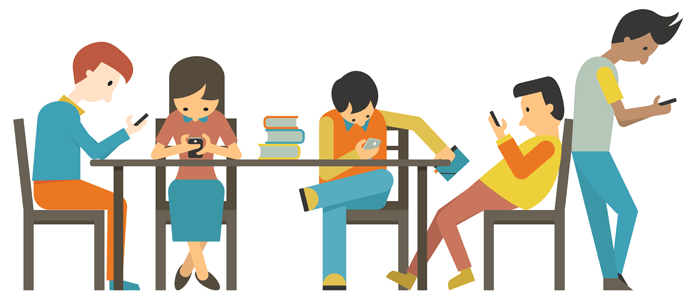
Nowadays I see people just roaming around with their heads down to a screen, ears closed with headsets and just expressing their heart out in chats. The sad truth is, technology advancements are making us so much dependent that we are unable to use our brains. we humans are meant to be calm, intelligent, social beings but technology has made us worst than ever before. I think it’s not the tech we should blame, it’s us. We are letting the tech innovators do it on us. I agree it has to lead to ease in our lives but with many negative effects which we can shut it down if we want.
There is literally a disease called NOMOPHOBIA (no more mobile phone phobia) which I think most of us suffer from. We just can’t resist our mobile phones. It’s just like any other addiction, rather worse to be honest.
Remember those days when we could do all the simple calculations in our heads, remember all the phone numbers, maintain a diary, gave more importance to our surroundings. and see now, for very minor calculations we use a calculator, Unable to remember our emergency numbers.
We are all now addicted to this piece of technology, and when I see parents or anyone just taking one’s phone for just some moments we are able to see withdrawal symptoms like anger, Restlessness, irritability. Most importantly the never fulfilling desire, spending more and more on buying new mobile phones just to show everyone and not even use it’s 10% potential.
I am being honest! how many of us just buy phones just because its more attractive and people will appreciate or be jealous? It’s Trending now and smartphone companies share a great market now. Its good to have the latest technology devices but only if it is required.
This piece of device is misused, especially by teens and young adults. They just get addicted to mobile phones very easily. Always occupied in mobiles, active on social media, watching porn, chatting unnecessarily, unlocking without any reason, occupied in camera with numerous filters and what not. It is a great time killer and hence they don’t find any time for themselves, family and most importantly their work. It is the age where your mind thinks out of the box but they just keep it occupied with the lethal box of technology.
Mobile Phone addiction is worse. They are always occupied in phones not realizing what’s happening around them. It is really altering our brains. According to Price, when we read digital media, the cluttered landscape of links and ads and the short bursts of attention that are required by scrolling and swiping and tweeting result in a contradiction in terms: “a highly focused state of distraction.” Even though this distraction is short-lived, however, its frequency causes its effect to be expressed on our mind, body, and health in a longer term. It brings about a long-lasting change in our brains.
Am I Addicted to my Smartphone?
This self-assessment is not meant to officially diagnose you with cell phone addiction. If you are concerned about your problematic behaviors, speak to your doctor or mental health professional about possible treatment. (https://www.psychguides.com/guides/signs-and-symptoms-of-cell-phone-addiction/)
- Do you find yourself spending more time on your smartphone than you realize?
- Do you find yourself mindlessly passing time on a regular basis by staring at your smartphone even though there might be better or more productive things to do?
- Do you seem to lose track of time when on your cell phone?
- Do you find yourself spending more time texting, tweeting, or emailing as opposed to talking to real-time people?
- Has the amount of time you spend on your cell phone been increasing?
- Do you secretly wish you could be a little less wired or connected to your cell phone?
- Do you sleep with your smartphone on or under your pillow or next to your bed regularly?
- Do you find yourself viewing and answering texts, tweets, and emails at all hours of the day and night, even when it means interrupting other things you are doing?
- Do you text, email, tweet, or surf the internet while driving or doing other similar activities that require your focused attention and concentration?
- Do you feel your use of your cell phone actually decreases your productivity at times?
- Do you feel reluctant to be without your smartphone, even for a short time?
- When you leave the house, you ALWAYS have your smartphone with you and you feel ill-at-ease or uncomfortable when you accidentally leave your smartphone in the car or at home, or you have no service, or it is broken?
- When you eat meals, is your cell phone always part of the table place setting?
- When your phone rings, beeps, buzzes, do you feel an intense urge to check for texts, tweets, or emails, updates, etc.?
- Do you find yourself mindlessly checking your phone many times a day even when you know there is likely nothing new or important to see?
By Sunansh Malik
 Vivact - Talking Healthcare