Spirituality and Men’s Health

Spiritual practices play an important role in men’s health. It may well be said that next time you see a man in the temple, it is likely that he is healthier than the one who never believed!

videoblocks-silhouette-of-a-man-praying-to-god-concept-of-faith-and-religion_bbwb0l8wm_thumbnail-full01.png

As a conclusion to the men’s health month, I chose to probe into the spiritual dimension of men’s health. This was partly due to my own curiosity in the field, and partly due to the neglect (or rather contempt) towards the spiritual dimension of health and wellness. Role of spirituality in health, healthcare, and wellness is often understated and misunderstood [1, 2, 3]. This is more so in men, as men are often perceived to be less spiritual as compared to women, even though this distinction may be more obscure in the east than in western countries.

An overarching body of evidence supports the positive role of spirituality in various health issues concerning men. This may not be limited to psychological health as popularly perceived, but also in physical health and disease [4]. Healthy practices associated with religion and spirituality such as discipline and yoga may be associated with some of the health-related outcomes. On the other hand, the social impact of religious and spiritual groups in health-related behaviors may also impact health outcomes.

Jaberi et al (2017) have defined the spiritual dimension of health as having three categories, namely, antecedents, attributes, and outcomes. In simple language, this would mean that the spiritual health of a person may be defined as constituting certain characteristics which are termed as attributes. These are the ability to think beyond physical self, understanding of meaning and purpose of life, interconnectedness among individuals and life, faithfulness, the power of integrating, multidimensionality and the concept of a human being as a holistic entity. These characteristics arise from the ability to look as oneself beyond a physical entity and spiritual awareness [5].

Garfield et al (2014) have attributed the effect of religiosity and spiritualism in health-related outcomes for men to two pathways. The first pathway is by buffering against effects of illness. This may come by health habits. As an example, worsening of depression may be mitigated in religious men as they often keep away from alcohol and tobacco etc, that may cause worsening of depression. Similarly, spiritual men are known to adhere to the medication regimen and are known to cope with illness related stress better. The second pathway is through the prevention of disease by following a healthy lifestyle, improved knowledge of health and wellness and increased resiliency [6].

Linkages between substance abuse, especially alcohol abuse and effect of spirituality in preventing and controlling substance abuse have been studied in various researches [6, 7, 8, 9, 10].  The effect of religion/ spirituality may be seen across ethnicities and geographical locations. Spirituality is also associated with reduced suicidal tendencies linked with substance abuse, as well as the prevention of relapse.

Spirituality has also been positively associated with increased physical activity [11] and therefore health promotion and prevention of various chronic diseases. Its effect in improved outcomes for various chronic diseases through various mechanisms such as better coping and compliance with prevention protocols have been documented in previous researches. Effect of spirituality in various chronic diseases such as type 2 diabetes [12], heart disease [13], rheumatoid arthritis [14], cancer [15]  and other chronic diseases [16] has also been established.

Additionally, the role of spiritual practices such as meditation and mindfulness is well known to be associated with good psychological health. Its role in coping with depressive states is also well known. Overall spiritual states are associated with reduced stress and improved coping behavior.

Even though there is an increasing evidence to support the positive role of religion and spirituality in health promotion and positive health along with disease prevention and control; there are still some religious practices in various religions that may prove to be associated with health hazards. These practices should be avoided. Overall, spiritual practices play an important role in men’s health. It may well be said that next time you see a man in the temple, it is likely that he is healthier than the one who never believed!


References

  1. Chidarikire, Shephard. “Spirituality: The neglected dimension of holistic mental health care.” Advances in Mental Health10.3 (2012): 298-302.
  2. Dimensions of wellness: Change your habits, change your life. Can Vet J. 2017;58(8):861-862.
  3. The role of spirituality in health care. Proc (Bayl Univ Med Cent). 2001;14(4):352-7.
  4. Garfield, Craig F., Anthony Isacco, and Ethan Sahker. “Religion and spirituality as important components of men’s health and wellness: An analytic review.” American Journal of Lifestyle Medicine7.1 (2013): 27-37.
  5. Jaberi A, Momennasab M, Yektatalab S, Ebadi A, Cheraghi MA. Spiritual health: A concept analysis. Journal of religion and health. 2017 Mar 10:1-24
  6. Garfield CF, Isacco A, Sahker E. Religion and spirituality as important components of men’s health and wellness: An analytic review. American Journal of Lifestyle Medicine. 2013 Jan;7(1):27-37.
  7. Castaldelli-Maia JM, Bhugra D. Investigating the interlinkages of alcohol use and misuse, spirituality and culture–Insights from a systematic review. International review of psychiatry. 2014 Jun 1;26(3):352-67.
  8. Koenig HG. Religion, spirituality, and health: The research and clinical implications. ISRN psychiatry. 2012 Dec 16;2012.
  9. Abdollahi A, Abu Talib M. Hardiness, spirituality, and suicidal ideation among individuals with substance abuse: The moderating role of gender and marital status. Journal of dual diagnosis. 2015 Jan 2;11(1):12-21.
  10. Shamsalinia A, Norouzi K, Khoshknab MF, Farhoudian A. Recovery based on spirituality in substance abusers in Iran. Global journal of health science. 2014 Nov;6(6):154.
  11. Silfee VJ, Haughton CF, Lemon SC, Lora V, Rosal MC. Spirituality and Physical Activity and Sedentary Behavior among Latino Men and Women in Massachusetts. Ethn Dis. 2017;27(1):3-10. Published 2017 Jan 19. doi:10.18865/ed.27.1.3
  12. Namageyo-Funa A, Muilenburg J, Wilson M. The role of religion and spirituality in coping with type 2 diabetes: a qualitative study among black men. Journal of religion and health. 2015 Feb 1;54(1):242-52.
  13. Nabolsi MM, Carson AM. Spirituality, illness and personal responsibility: the experience of Jordanian Muslim men with coronary artery disease. Scandinavian journal of caring sciences. 2011 Dec;25(4):716-24.
  14. Bartlett SJ, Piedmont R, Bilderback A, Matsumoto AK, Bathon JM. Spirituality, well‐being, and quality of life in people with rheumatoid arthritis. Arthritis Care & Research: Official Journal of the American College of Rheumatology. 2003 Dec 15;49(6):778-83.
  15. Au TY, Zauszniewski JA, King TM. Health-seeking behaviors and sexuality in rectal cancer survivors in Taiwan: associations with spirituality and resourcefulness. InOncology nursing forum 2012 Sep 1 (Vol. 39, No. 5).
  16. Harvey IS, Silverman M. The role of spirituality in the self-management of chronic illness among older African and Whites. Journal of cross-cultural gerontology. 2007 Jun 1;22(2):205-20.

written by,

Dr. Ankur Sharma
Tech-addicted

There is actually a disease called NOMOPHOBIA (no more mobile phone phobia) which I think most of us suffer from. We just can’t resist our mobile phones. It’s just like any other addiction, rather worse to be honest. 

nomo

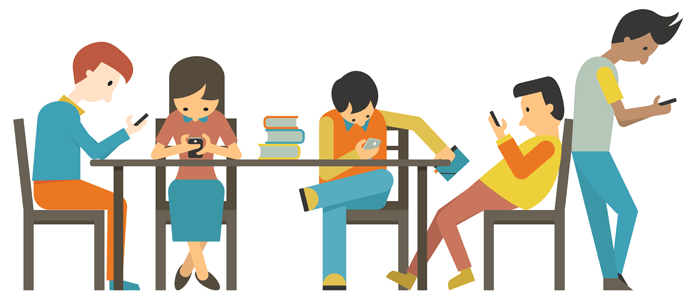
Nowadays I see people just roaming around with their heads down to a screen, ears closed with headsets and just expressing their heart out in chats. The sad truth is, technology advancements are making us so much dependent that we are unable to use our brains. we humans are meant to be calm, intelligent, social beings but technology has made us worst than ever before. I think it’s not the tech we should blame, it’s us. We are letting the tech innovators do it on us. I agree it has to lead to ease in our lives but with many negative effects which we can shut it down if we want.

There is literally a disease called NOMOPHOBIA (no more mobile phone phobia) which I think most of us suffer from. We just can’t resist our mobile phones. It’s just like any other addiction, rather worse to be honest.

Remember those days when we could do all the simple calculations in our heads, remember all the phone numbers, maintain a diary, gave more importance to our surroundings. and see now, for very minor calculations we use a calculator, Unable to remember our emergency numbers.

We are all now addicted to this piece of technology, and when I see parents or anyone just taking one’s phone for just some moments we are able to see withdrawal symptoms like anger, Restlessness, irritability. Most importantly the never fulfilling desire, spending more and more on buying new mobile phones just to show everyone and not even use it’s 10% potential.

I am being honest! how many of us just buy phones just because its more attractive and people will appreciate or be jealous? It’s Trending now and smartphone companies share a great market now. Its good to have the latest technology devices but only if it is required.

This piece of device is misused, especially by teens and young adults. They just get addicted to mobile phones very easily. Always occupied in mobiles, active on social media, watching porn, chatting unnecessarily, unlocking without any reason, occupied in camera with numerous filters and what not. It is a great time killer and hence they don’t find any time for themselves, family and most importantly their work. It is the age where your mind thinks out of the box but they just keep it occupied with the lethal box of technology.

Mobile Phone addiction is worse. They are always occupied in phones not realizing what’s happening around them. It is really altering our brains. According to Price, when we read digital media, the cluttered landscape of links and ads and the short bursts of attention that are required by scrolling and swiping and tweeting result in a contradiction in terms: “a highly focused state of distraction.” Even though this distraction is short-lived, however, its frequency causes its effect to be expressed on our mind, body, and health in a longer term. It brings about a long-lasting change in our brains.

Am I Addicted to my Smartphone?

This self-assessment is not meant to officially diagnose you with cell phone addiction. If you are concerned about your problematic behaviors, speak to your doctor or mental health professional about possible treatment. (https://www.psychguides.com/guides/signs-and-symptoms-of-cell-phone-addiction/)

  • Do you find yourself spending more time on your smartphone than you realize?
  • Do you find yourself mindlessly passing time on a regular basis by staring at your smartphone even though there might be better or more productive things to do?
  • Do you seem to lose track of time when on your cell phone?
  • Do you find yourself spending more time texting, tweeting, or emailing as opposed to talking to real-time people?
  • Has the amount of time you spend on your cell phone been increasing?
  • Do you secretly wish you could be a little less wired or connected to your cell phone?
  • Do you sleep with your smartphone on or under your pillow or next to your bed regularly?
  • Do you find yourself viewing and answering texts, tweets, and emails at all hours of the day and night, even when it means interrupting other things you are doing?
  • Do you text, email, tweet, or surf the internet while driving or doing other similar activities that require your focused attention and concentration?
  • Do you feel your use of your cell phone actually decreases your productivity at times?
  • Do you feel reluctant to be without your smartphone, even for a short time?
  • When you leave the house, you ALWAYS have your smartphone with you and you feel ill-at-ease or uncomfortable when you accidentally leave your smartphone in the car or at home, or you have no service, or it is broken?
  • When you eat meals, is your cell phone always part of the table place setting?
  • When your phone rings, beeps, buzzes, do you feel an intense urge to check for texts, tweets, or emails, updates, etc.?
  • Do you find yourself mindlessly checking your phone many times a day even when you know there is likely nothing new or important to see?

By Sunansh Malik

Future of Healthcare: Trends & Challenges

I see a future where healthcare will be in people’s mind as well as on their wrists, in their wedding rings and on their pens! It will be different, not only because it will be everywhere, but also because it will be in an individual’s own hands.

As we move away from the concept of ‘sick care’ to the concept of  ‘health care’,[1] the two basic needs have emerged.  First, the ability to connect an individual with a healthcare system [2]. Second, the ability of an individual to take care of his/her health [3].

This means that we have to think of healthcare as being away from centralized institutions like hospitals or health centers to people’s homes and their minds and form new patient-centered networks. We also need to redefine healthcare professionals as people who monitor and advice people on health in addition to curing disease. This de-institutionalization of healthcare and an increase in its ambit will mean the evolution of new ideas for monitoring, diagnosis, prevention, and treatment of disease [4].

Many of my colleagues in India think of this idea as prevention centric, however, new concepts and programs such as parkinson.net have demonstrated that taking healthcare out of the infirmaries into patient’s own home is as much about disease treatment as about prevention. In fact, the best thing about ubiquitous and networked healthcare is that it makes a whole continuum about health, prevention, disease and cure very much patient-centered while making the pitfalls verifiable [5].  This ensures improved care in the entire spectrum of health. Further, it also takes us closer to holistic health by considering and addressing various phases of health care.

However, there are various barriers and challenges to this type of healthcare. A lot has been said about the economic benefits of this type of healthcare. However, in my opinion, the economic benefits even though huge and long-lasting will not be immediate. In fact, by increasing the spectrum of care we might as well end up increasing the total cost of healthcare in the beginning. There will be some obvious sideways advantages like an improvement of growth in healthcare sector and jobs, but the real economic benefits due to reduced disease burden and per-capita expenditure on disease treatment will take some time to show. Another challenge will be about making this ubiquitous care really ubiquitous. Use of technology is dependent on financial status, literacy, and availability of resources, therefore, that there will be disparities based on these factors!  This means that it will make health care for all an even more far-fetched dream.  There are other challenges like ethical challenges and data confidentiality etc. which have to be addressed.

Therefore, even though we need to move forward towards this new phase of healthcare; our future researches should not only concentrate on making new ways to provide this new healthcare but, also on how this healthcare could be more beneficial, foolproof and universal.

References:

  1. Fani Marvasti F, Stafford RS. From sick care to health care–reengineering prevention into the U.S. system. N Engl J Med. 2012 Sep 6;367(10):889-91. doi:10.1056/NEJMp1206230. PubMed PMID: 22931257; PubMed Central PMCID: PMC4339086.
  2. Tomines A, Readhead H, Readhead A, Teutsch S. Applications of electronic health information in public health: uses, opportunities & barriers. EGEMS (Wash DC). 2013;1(2):1019. Published 2013 Oct 28. doi:10.13063/2327-9214.1019
  3. Pomey MP, Ghadiri DP, Karazivan P, Fernandez N, Clavel N. Patients as partners: a qualitative study of patients’ engagement in their health care. PLoS One. 2015;10(4):e0122499. Published 2015 Apr 9. doi:10.1371/journal.pone.0122499
  4. Technology and the future of healthcare. J Public Health Res. 2013;2(3):e28. Published 2013 Dec 1. doi:10.4081/jphr.2013.e28

5.      Thielst CB. Social media: ubiquitous community and patient engagement. Front Health Serv Manage. 2011 Winter;28(2):3-14. PubMed PMID: 22256506.

Letters from Kashmir

A few days back, a life stuck in the shadow of many a severe life-threatening drug, was finally caught and brought under the condition of normalcy. A life totally caught in the mire of severe drug addiction was restored.

generic-white-tablets

For me, one is addicted when one makes drugs a priority over life – the drugs that take the user far from normalcy and to the brink of ruining one’s identity! It is when one loses identity for the urge of drugs that one usually realizes the mistake. It is then that one realizes that all that the drugs gave in return was a life of dissolved potential and weird irrational personality; unconscious and unaware of worldly affairs.

Usually, people get into addiction due to some kind of stress that they undergo. It may be social religious etc. Most of the youth of the present generation are drug addicts because they may have passed through some types of criticism like due to their family standard, their weakness in education and other social issues.

A large number of our youth are also caught due to the perceived western influence on their minds. It completely changes our mindset and makes us feel that we are at the top of the world, but it actually ruins us down to the bottom. Some youth use cigarettes that makes them feel that it raises their social status, but they are unaware that it is actually wrong and makes their status to fall in society.

Confronting-Addiction_827_460_80_c1.jpg

Some of our genius youth crush a bit of charas and fetch a feeling of being a saint and claim to have achieved an ascetic tendency. Others fall in love and when they feel cheated, some might start indulging into drugs. Many a great minded youth of our country also get indulged with this evil of drug addiction because their potential is being crushed under the feet of some rich families who snatch, through corrupt practices, the rightful opportunities belonging to youth mid or lower class families who have worked for it. The youth suffer unemployment and begin to use drugs that later leads to suicides too.

Now! In the present era of development and education, there is an alarming need to control the addiction and save the youth and the future of our country. There are many ways to control addiction among youth as it can be controlled starting from grass root level to the next higher levels up to the highest level. This way the drug addiction can be completely neutralized in our country.

First, individuals can play a great role in diverting the attention of youth towards some social and religious work that will inculcate a feeling of motivation in their minds and make them stress-free. Hence, it will prevent them from using drugs.

Parents also have a vital role to play to drive this addiction out of our society by being more supportive of them, rather than being critical. This way their children won’t suffer any kind of stress and would possibly focus more on their studies. Additionally, there should also be social action on selling and availability of these drugs, especially to the youth.

Educational and other institutes can help a lot to destroy this evil of addiction by introducing youth to various athletic activities that will completely change the mind of youth about addiction. These institutes can also organize various debates and programs in view of the drug abuse thus control it a lot. The government must play a major role in driving the evil out by introducing various schemes for youth, generating employment and setting various rehabilitation centers up for the already addicted youth, so that they can rehabilitate and start their journey again with a new positive change. There should be a complete and effective ban the life-threatening drugs in the country and all the drug peddlers and sellers should be arrested as they are also a great cause for the ruin of the youth.

Finally, the steps against this biggest social evil should be made our top priority because if not controlled now, our country may suffer a lot and would be ruled my mindless cowards in future. And that would be the most frightening debt under which the country may soon drown.

Saqib Javed Dar (Anantnag)

Muqu’s Creations

(Saqib Javed Dar is a Class XI student of Saint Peter’s International Academy, Anantnag, J&K. He studies science stream and aspires to be a future doctor and writer. He is also an avid writer and writes about his experiences of life.)

Men Don’t Cry

Of course, they do! Cristiano Ronaldo and Neymar cried on the pitch in 2018, for instance. Whether that made them lesser of men or not is debatable only in a congregation of fools.

7096efcf57f1ce710c3b95ac48d2164c.jpg

Believe us, crying and other emotional stuff never causes any physical changes in you that strip you of your masculinity in any way! Yes, not crying and pretending to be ever-so-tough would definitely lead to worsening of psychological problems that men might have. The fact is that a large number of men do suffer from clinical depression and yet, don’t acknowledge it. Nor do a majority of men get treated for depression as they find talking about it a taboo. As a result, more men who have depression end up losing their lives to suicide than women do. In this article, we aim at identifying the symptoms that constitute and point towards the possibility of clinical depression among men.

There may be small episodes of sadness and depression in everyone’s life. However, any depression is termed as clinical depression if the symptoms last for two weeks or more. Such a depression may affect one’s work, relationship as well as physical health. Not to say, it may sometimes lead to attempted suicides. Here is a list of symptoms that may indicate depression in men.

  • Men, unlike women, feel an increased aggression and irritable behavior when in depression.
  • Men in depression may sometimes report as feeling anxious or panicky, rather than the sadness reported by women.
  • There may be a loss of interest in work or hobbies including social activity as well as loss of libido.
  • Depression in men may also be associated with a lack in ability to concentrate on things as well as remember things.
  • There may be deficient or excessive appetite as well as sleep. This may be associated with physical manifestations like tiredness, digestive disorders or pains, and aches.
  • There may be thoughts or attempts to commit suicide.

A knowledge of these symptoms may help an individual in identifying the possibility of depression. If someone has even some of these symptoms, we suggest that one should see a mental health specialist or least confide in a close relative or friend who might be able to find one for you and help you in seeking care. Remember that the treatment of depression doesn’t always involve medication. Even if you are prescribed medicine, their benefit will always outweigh the risks that you have in going without medicine.

Always remember that the first step in getting out of depression is to acknowledge that it is there and talking about it to loved ones. If you have it, you are not the only man in the world who has depression. There are many others who have it, and many are becoming better every day with the help of their close ones and friends along with proper treatment.


The C-Section

Caesarian section also called the C-SECTION or otherwise simply the cut from the womb is the use of surgery to deliver babies. It is especially important when a normal vaginal delivery would turn fatal to the baby or the mother.

15-human-foetus-in-the-womb-artwork-jellyfish-pictures

The need for C-Section

Reasons for surgical delivery includes obstructed labor, twin pregnancy, high blood pressure in the mother or problems related to the umbilical cord. Sometimes, the shape of the mother’s pelvis or a history of previous C-section necessitates performance of C-section. At the other times, it may be performed on request by someone, usually the mother.

Main issues that necessitate C-section are listed as follows:

  • Placental issues (Placental abruption, placenta praevia etc)
  • Failure to induce labor.
  • A condition of macrosomia (baby weighing more than 4000grams)
  • Abnormalities of umbilical cord
  • Previous medical history
  • HIV infection of mother with a high viral load.
  • STDs, which can cause infection in baby if born vaginally.
  • Hypertension in mother or baby.
  • Uterine rupture or an elevated risk.
  • Prolonged labor or failure to progress(dystopia)
  • Infertility
  • Chronic pelvic pain
  • Small bowel obstructions

Adverse outcomes

Adverse outcomes in the low-risk pregnancies occur in 9.2% of C-section. The post-operative adhesions will lead to further health issues in the near future. Added to this are the most common incisional hernias which later require surgical corrections. The wound may also get infected and further lead to more complications.

If performed in an emergency, the risk of surgery may be increased due to a number of factors. The patient’s stomach may not be empty and thus the risk of anesthesia increases. Severe blood loss may end up in the requirement of blood transfusion and post dural puncture spinal headaches.

Moreover above all these is the high chance of hysterectomies(removal of the uterus) being done. Increased incidence of postnatal depression and psychological trauma in mothers is also a fatal outcome.

The next baby

Delivery of the next child after the previous section of the cut womb can either be by the vaginal method or the elective repetition method. But this has to be taken care of because of the high risk of problems occurring in the vaginal method.

Prevention better than cure

Its always better to prevent than later searching for a cure. The things that should be done to prevent these kinds of conditions are simple enough that they can be well followed.

  • The pregnant ladies should be advised for appropriate exercising under somebody’s guidance. The lady should be healthy enough by the time of parturition.
  • Counseling sessions should be provided to the ladies who prefer for this mode rather than the normal delivery.
  • Women should be given the proper idea of what they will have to face and they should be given confidence.
  • More than everything this section should not be adopted unless there is a non-avoidable reason.

The pain now will give you a great gain for tomorrow.

Manovember!

Dear Readers,

moustache


Many chronic and lifestyle-related diseases have a high predilection towards men [1]. Two of the most common modern epidemics – diabetes and cardiovascular disease have been consistently found to be more common in males than in females[2,3]. On the other hand, silent epidemic of depression in males has been mostly left unacknowledged and often under-diagnosed and untreated [4]. This has led to an increased incidence of suicides among men [5]. On the other hand, many cancers have a higher incidence in males as compared to females [6].

However, traditionally the domain of men’s health has either been left neglected [7] or has been limited to sexually-transmitted disease and malignancies of the prostate. Instead, due to taboos, discussion on men’s health has often been detoured into domains of physical fitness and diet [8]. Popular and commercially available literature fans these prejudices and makes venturing into men’s health issues like depression and suicide even tougher. It has been seen that men rarely if ever talk about their depression, stress and anxiety to even their closest ones. This leads to an increased impact of SAD trio and poorer outcomes. In 2017, the World Health Organization (WHO) gave the slogan – Depression, Let’s talk! in order to improve people’s attitude towards depression and make more people get themselves treated [9, 10].

As November closes in, various public health campaigns on men’s health like Movember and No-shave November have started gathering momentum. Our team at Vivact has picked this opportunity to make November a month on men’s health. Our boys have decided that they would write a blog on men’s health each week – particularly targeting the epidemic of depression among men. We will have a weekly article on this topic for the whole month as a part of our initiative named – Manovember! We invite you to discuss and think of men’s health this month to realize the goal of health for all.

Regards.

Team Vivact!

References:

  1. Sex and gender differences in health. Science & Society Series on Sex and Science. EMBO Rep. 2012;13(7):596-603. Published 2012 Jun 15. doi:10.1038/embor.2012.87
  2. Weidner, Gerdi. Why do men get more heart disease than women? An international perspective. Journal of American College Health6 (2000): 291-294.
  3. Kautzky-Willer A, Harreiter J, Pacini G. Sex and Gender Differences in Risk, Pathophysiology and Complications of Type 2 Diabetes Mellitus. Endocr Rev. 2016;37(3):278-316.
  4. Ogrodniczuk JS, Oliffe JL. Men and depression. Can Fam Physician. 2011;57(2):153-5.
  5. Ogrodniczuk J, Oliffe J, Kuhl D, Gross PA. Men’s mental health: Spaces and places that work for men. Can Fam Physician. 2016;62(6):463-4.
  6. Dorak MT, Karpuzoglu E. Gender differences in cancer susceptibility: an inadequately addressed issue. Front Genet. 2012;3:268. Published 2012 Nov 28. doi:10.3389/fgene.2012.00268
  7. Baker P, Dworkin SL, Tong S, Banks I, Shand T, Yamey G. The men’s health gap: men must be included in the global health equity agenda. Bull World Health Organ. 2014;92(8):618-20.
  8. Men’s Health: What Should We Know?. World J Mens Health. 2015;33(2):45-9.
  9. Chong, Siow Ann, Yee Ming Mok, and Mythily Subramaniam. Depression: Let’s Talk. 2017; 121-123.
  10. Behere PB, Kumar K, Behere AP. Depression: Why to talk?. Indian J Med Res. 2017;145(4):411-413.

The Second Opinion

‘Trust is like a mirror. Once broken it never joins.’

abcd-trust-model-toolshero-696x348

There we go with a most virulent query in the minds of thousands. Seeking of a second opinion from a doctor.

Seeking a second opinion is a common practice that, in a patient’s perspective, can improve accuracy for a treatment and reduce unnecessary procedures and risks. Almost 88% of the patients are seen going for a second opinion before treatment. This has many advantages and disadvantages. Now let us go into the roots of this thought.

Reasons for seeking a second opinion

It is reasonable to seek multiple opinions for your health. Inevitable discrepancies in the clinical judgment make the second opinions clinically significant and cost-effective due to their potential to reduce the costs of unnecessary expensive and invasive diagnostic & surgical procedures. The second opinion (SO) program was first introduced in the US in 1970’s by the insurance companies. Many countries including India support the SO program. Some like the UK, however, discourage it.

Types of seekers

There are mainly three types of patients who seek a second opinion.

Type 1 are the ones who go for it on their own due to trust issues or being doubtful about the doctor or the procedures that are undertaken.

Type 2 are those which are referred by the physician. It may be due to primary care physician’s doubts about diagnosis and perceived need of an expert advice.

Type 3 is by a suggestion of a third party. It may be friends, relatives or any others. This happens when someone other than the physician expresses a doubt about the treatment.

Advantages & Disadvantages

Many diagnostic discrepancies can be solved by a second opinion. A study in the Journal of Evaluation in Clinical Practise showed that only 12% of the cases under the second opinion confirmed with the original diagnosis made in the first opinion. This clearly shows that when you go for a second opinion 1 out of every 5 people gets a different outcome. This may not only save the cost of treatment, but also the risk of over/ under treatment.

The major disadvantage is that the major stem of these SO seeking mainly comes from mere anxiety and thus it leads to a trend called ‘Doctor shopping’ which can prove to be a real burden for the patients and the systems. This can happen in the absence of a regulated mechanism.


Refresh your thoughts

Get SO’s only done if the symptoms continue to persist,  or if diagnosed with major conditions. Go for it when you feel discomfort with the present doctor you consult.

To conclude

The need of the hour is the new mechanisms that help patients in the complicated process of seeking  SO and provide them with specialists who are able to provide them with better alternatives.

Always keep in mind that we are living in a century where knowledge comes by a single tap at the tip of our fingers. So be smart enough to move in pace with the time and technology and hence become an active part in the healthcare.