
“Lesser the time invested, greater the discrepancies..”
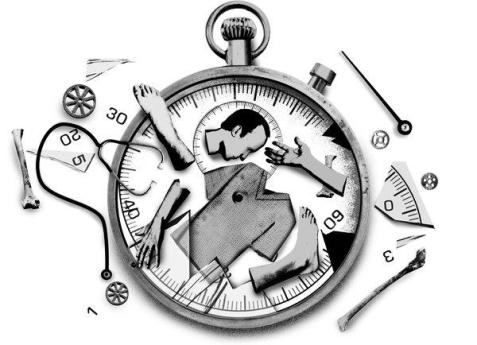
Here! Back again with a food for thought. Now, let us begin with a statement which seems a little funny and deeply thoughtful at the same time – ‘The Doctor is Busy!’
A relatively recent study published in the British Medical Journal revealed that the doctors in India see patients for an average of mere two minutes! Doesn’t that seem to leave us wondering about the quality of healthcare we receive? Anyhow, this seems to be comparatively ok in a world where the time is considerably much variant all across the globe. Many like Bangladesh provides 48 seconds while some like Sweden gives 22.5 minutes for primary consultations.
The focus of thought today on is how it affects the large population and what it’s impact can be in the field of health sciences.
What lies behind??
Now let’s get into the core of this thought. The reasons behind the current two-minute system.
- More patients and fewer doctors: Many a time the doctors seem to have more they can comfortably see. Thus they are forced to limit the time spent on a single one. This seems to be a common cause.
- Unequal patient distribution: Whereas some provider facilities are overburdened, others seem to be working way below their capacity. This leads to a difference in the time provided by the doctors to the patients. For example, the lone nursing center in a big village might have more patients than a practice in the city that is surrounded by four other practices.
- Bottlenecks in patient flow: More often than not, the hospital management systems fail to manage patient flow. Thus creating bottlenecks and lines that move slowly. Therefore even when the number of doctors and patient distribution is correct, the time wasted in the process is so much that it leaves little actual time between the doctor and the patient.
Risk factors
The result of all these is that ultimately the patient and the healthcare as a whole suffers. The shorter consultation times have been linked to the poorer health outcomes for patients and a heightened risk of burnout for doctors, the research journal revealed. Shorter consultation time has lead to multiple drugs prescribed to the patient (polypharmacy), overuse of antibiotics etc.
The unheard grievance
Above all these is the real unheard cry. A patient cannot be cured just with medicine. The disease is not only the ill condition of the body, but it is also an indicator of our mental state too. Along with our physical condition, our mind needs a cure too. This is achieved by the power of a doctor and the power of his words. A two-minute conversation won’t suffice for this! The two minutes of which we are barely speaking can only include a mechanical talk and not that of a friendly interaction.
What next??
The current process and flow systems should change. More time should be invested in interacting with patients, and those talks should turn out to be qualitative and relieving for the patient. The patient should be able to convey his pain, intensity of it and above all the way he feels.
Remember only little can be achieved in less than 5 minutes, unless focus is largely on detection and management of the gross disease. Always keep in a mind, more than medicines or anything else it’s the love and friendly care of the doctor that turns out to be the best cure.

 Vivact - Talking Healthcare