
Spiritual practices play an important role in men’s health. It may well be said that next time you see a man in the temple, it is likely that he is healthier than the one who never believed!
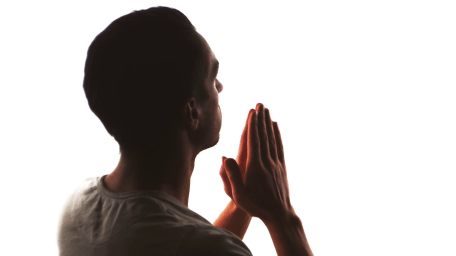
As a conclusion to the men’s health month, I chose to probe into the spiritual dimension of men’s health. This was partly due to my own curiosity in the field, and partly due to the neglect (or rather contempt) towards the spiritual dimension of health and wellness. Role of spirituality in health, healthcare, and wellness is often understated and misunderstood [1, 2, 3]. This is more so in men, as men are often perceived to be less spiritual as compared to women, even though this distinction may be more obscure in the east than in western countries.
An overarching body of evidence supports the positive role of spirituality in various health issues concerning men. This may not be limited to psychological health as popularly perceived, but also in physical health and disease [4]. Healthy practices associated with religion and spirituality such as discipline and yoga may be associated with some of the health-related outcomes. On the other hand, the social impact of religious and spiritual groups in health-related behaviors may also impact health outcomes.
Jaberi et al (2017) have defined the spiritual dimension of health as having three categories, namely, antecedents, attributes, and outcomes. In simple language, this would mean that the spiritual health of a person may be defined as constituting certain characteristics which are termed as attributes. These are the ability to think beyond physical self, understanding of meaning and purpose of life, interconnectedness among individuals and life, faithfulness, the power of integrating, multidimensionality and the concept of a human being as a holistic entity. These characteristics arise from the ability to look as oneself beyond a physical entity and spiritual awareness [5].
Garfield et al (2014) have attributed the effect of religiosity and spiritualism in health-related outcomes for men to two pathways. The first pathway is by buffering against effects of illness. This may come by health habits. As an example, worsening of depression may be mitigated in religious men as they often keep away from alcohol and tobacco etc, that may cause worsening of depression. Similarly, spiritual men are known to adhere to the medication regimen and are known to cope with illness related stress better. The second pathway is through the prevention of disease by following a healthy lifestyle, improved knowledge of health and wellness and increased resiliency [6].
Linkages between substance abuse, especially alcohol abuse and effect of spirituality in preventing and controlling substance abuse have been studied in various researches [6, 7, 8, 9, 10]. The effect of religion/ spirituality may be seen across ethnicities and geographical locations. Spirituality is also associated with reduced suicidal tendencies linked with substance abuse, as well as the prevention of relapse.
Spirituality has also been positively associated with increased physical activity [11] and therefore health promotion and prevention of various chronic diseases. Its effect in improved outcomes for various chronic diseases through various mechanisms such as better coping and compliance with prevention protocols have been documented in previous researches. Effect of spirituality in various chronic diseases such as type 2 diabetes [12], heart disease [13], rheumatoid arthritis [14], cancer [15] and other chronic diseases [16] has also been established.
Additionally, the role of spiritual practices such as meditation and mindfulness is well known to be associated with good psychological health. Its role in coping with depressive states is also well known. Overall spiritual states are associated with reduced stress and improved coping behavior.
Even though there is an increasing evidence to support the positive role of religion and spirituality in health promotion and positive health along with disease prevention and control; there are still some religious practices in various religions that may prove to be associated with health hazards. These practices should be avoided. Overall, spiritual practices play an important role in men’s health. It may well be said that next time you see a man in the temple, it is likely that he is healthier than the one who never believed!
References
- Chidarikire, Shephard. “Spirituality: The neglected dimension of holistic mental health care.” Advances in Mental Health10.3 (2012): 298-302.
- Dimensions of wellness: Change your habits, change your life. Can Vet J. 2017;58(8):861-862.
- The role of spirituality in health care. Proc (Bayl Univ Med Cent). 2001;14(4):352-7.
- Garfield, Craig F., Anthony Isacco, and Ethan Sahker. “Religion and spirituality as important components of men’s health and wellness: An analytic review.” American Journal of Lifestyle Medicine7.1 (2013): 27-37.
- Jaberi A, Momennasab M, Yektatalab S, Ebadi A, Cheraghi MA. Spiritual health: A concept analysis. Journal of religion and health. 2017 Mar 10:1-24
- Garfield CF, Isacco A, Sahker E. Religion and spirituality as important components of men’s health and wellness: An analytic review. American Journal of Lifestyle Medicine. 2013 Jan;7(1):27-37.
- Castaldelli-Maia JM, Bhugra D. Investigating the interlinkages of alcohol use and misuse, spirituality and culture–Insights from a systematic review. International review of psychiatry. 2014 Jun 1;26(3):352-67.
- Koenig HG. Religion, spirituality, and health: The research and clinical implications. ISRN psychiatry. 2012 Dec 16;2012.
- Abdollahi A, Abu Talib M. Hardiness, spirituality, and suicidal ideation among individuals with substance abuse: The moderating role of gender and marital status. Journal of dual diagnosis. 2015 Jan 2;11(1):12-21.
- Shamsalinia A, Norouzi K, Khoshknab MF, Farhoudian A. Recovery based on spirituality in substance abusers in Iran. Global journal of health science. 2014 Nov;6(6):154.
- Silfee VJ, Haughton CF, Lemon SC, Lora V, Rosal MC. Spirituality and Physical Activity and Sedentary Behavior among Latino Men and Women in Massachusetts. Ethn Dis. 2017;27(1):3-10. Published 2017 Jan 19. doi:10.18865/ed.27.1.3
- Namageyo-Funa A, Muilenburg J, Wilson M. The role of religion and spirituality in coping with type 2 diabetes: a qualitative study among black men. Journal of religion and health. 2015 Feb 1;54(1):242-52.
- Nabolsi MM, Carson AM. Spirituality, illness and personal responsibility: the experience of Jordanian Muslim men with coronary artery disease. Scandinavian journal of caring sciences. 2011 Dec;25(4):716-24.
- Bartlett SJ, Piedmont R, Bilderback A, Matsumoto AK, Bathon JM. Spirituality, well‐being, and quality of life in people with rheumatoid arthritis. Arthritis Care & Research: Official Journal of the American College of Rheumatology. 2003 Dec 15;49(6):778-83.
- Au TY, Zauszniewski JA, King TM. Health-seeking behaviors and sexuality in rectal cancer survivors in Taiwan: associations with spirituality and resourcefulness. InOncology nursing forum 2012 Sep 1 (Vol. 39, No. 5).
- Harvey IS, Silverman M. The role of spirituality in the self-management of chronic illness among older African and Whites. Journal of cross-cultural gerontology. 2007 Jun 1;22(2):205-20.
written by,
Dr. Ankur Sharma
 Vivact - Talking Healthcare